Theodicy: Self, Sin, & Suffering
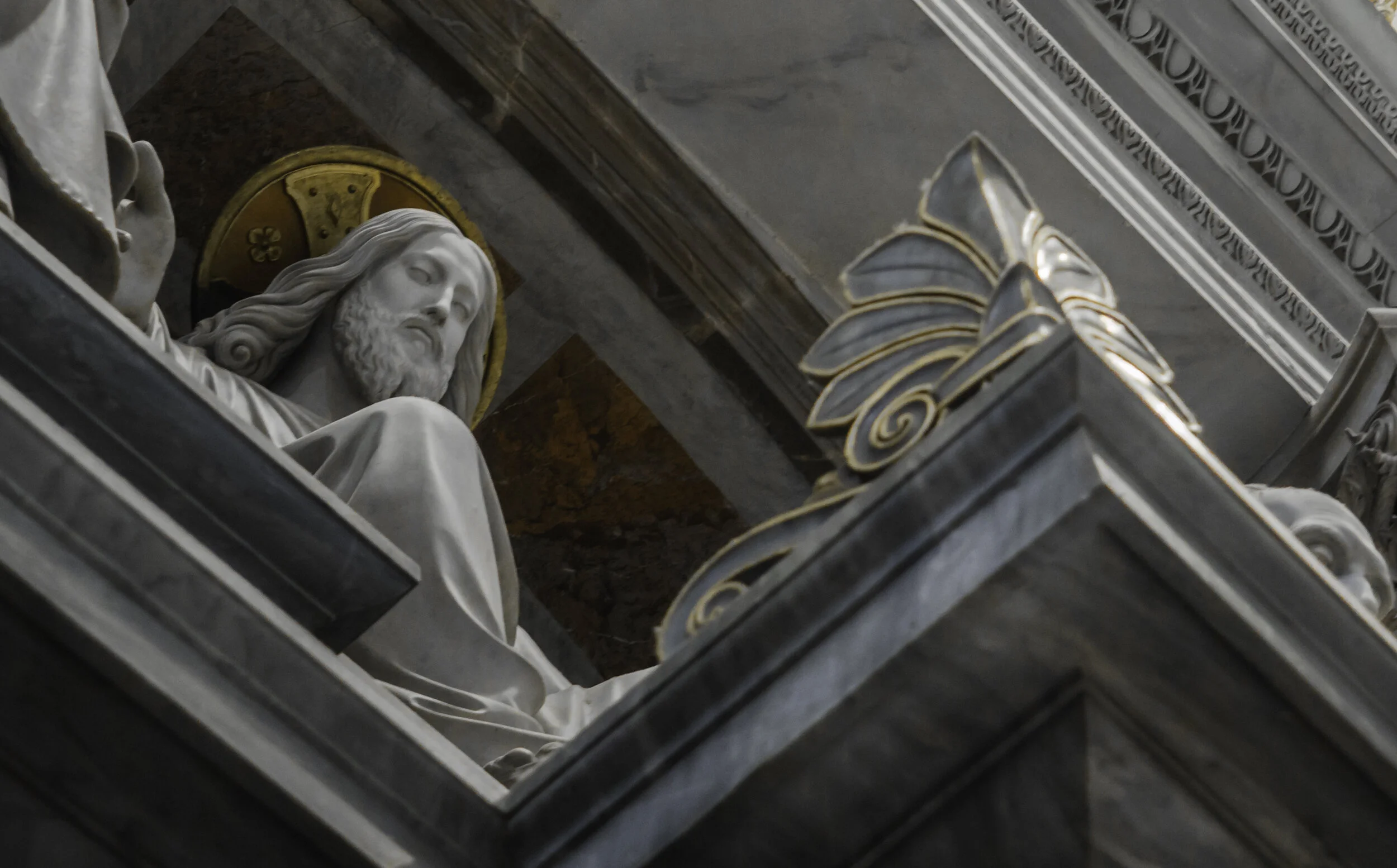
“Eli, Eli, lama sabachthani? “My God, my God, why have you forsaken me?””
Our sense of self oftentimes dips into despair as we look at the sufferings around and within us. Sin and suffering are experiences all of humanity goes through. It creates the need to address God directly, just as Jesus does when he is on the cross: why me? How, how can there be an omnipresent, omnipotent, and omniscient loving God when the world is plagued by suffering? Or, to make it more personal, why does God allow me to suffer; why is He letting this happen? Questions of sin and suffering arise naturally as one experiences the world and all of its manifestations. The ancient question of why bad things happen—especially if God exists—has created many theological and philosophical answers.
There are three main influences on my understanding of theodicy (i.e. understanding suffering through theology); first being that sin and matter are not equal. In other words, the body is not inherently evil, lower than the soul, or sinful. Secondly, sin is the separation of self and God. Thirdly, sin manifests differently: individually, collectively, systemically, and naturally.
Throughout western philosophical and theological thought, there has always been an inherited dualism. The separation of matter and spirit arose out of Plato’s school of thought promoting that there is an essence not portrayed in physical form. For example, he uses the form of a chair. What we see as a chair (chair being a physical construct of social, intellectual, and technological evolutionary achievement) does not fully represent what it actually is—wood, nails, etc… Applied to the person, a human is not fully represented by the body because humans are capable of thought. Consciousness is a different form outside of matter but contained within. This is the dualism of Platonic philosophy—body and spirit.
However, according to Plato and later Christian theologians using Platonic and Aristotelian thought, the body became lesser than consciousness. Morality and ethics, the ability to choose between what is considered right and wrong, give the mind an advantage over the body because the physical form simply takes what it needs to survive. Indeed, if we are to examine the mortal sins of Christian thought, we see that a few of them come from indulging bodily desires—lust (sexual), gluttony (hunger), sloth (rest).
Centuries of dualistic thought have cast a dark shadow on the human body resulting in a fixation of the inherent sinfulness of flesh. However, my theodicy is not grounded in the dualism of the past, but rather the trinitarian experience of union.
Thus, my theology of suffering does not promote the idea that the flesh is the root of evil. I cannot look into a dying patient’s eyes and think that their mortal body is unholy. For me, God took our humanly form in order to reclaim its existence—saying to us that it is holy and worthy of love. Just as God created us in his own image, so too are we transfigured through the realization of our worthiness as human beings. Christo-centric Humanism relies on the physical body and blood of Jesus Christ to represent and teach us about the holiness of flesh. Our flesh is an incarnation of our spirit. Whereas Plato and St. Aquinas are quick to say that the flesh weighs down the spirit, I offer the rebuttal that our flesh lifts us closer to the heavens; closer to the reality of God’s Kingdom on Earth.
Therefore, it is imperative that humanity break with the ancient dualism in order for our bodies and minds to heal from centuries of degradation. To separate the body and mind is to experience a disconnection with our created reality. Dualism causes the distinction and separation from one’s fully understood self; for you cannot understand yourself without understanding how the flesh is joined together with the mind and/or soul. This is the root of one’s separation of the self from God, thus leading me to my next understanding of sin: separation and unfulfillment of being fully realized.
“Sin is: before God in despair not to will to be oneself, or before God in despair to will to be oneself… Faith is: that the self in being itself and in willing to be itself rests transparently in God.”
The quote above by existentialist philosopher Kierkegaard provides the philosophical understanding of sin as related to the self. First, he describes sin as being before God. All sin is theological in nature, meaning that we only have a social and cultural understanding of sin as it relates to our relationship with God. This difference is subtle but important. Sin, as it relates to God, is rooted in what disconnects us from God. There are different interpretations and translations of sin: from being contrary to God’s nature to walking down the wrong path, sin has always coincided with morality and ethics. But it’s always in relation to God’s existence. So, can one sin without believing in God? If you said yes, your answer reflects your own relationship, belief, and faith in God; therefore the accused sin passes through your judgment and into God’s presence. However, if you answered no, then arises the question of whether there is a moral obligation tied to the action of the other (i.e. was it wrong?).
You can see where we (I and Kierkegaard) are heading with this. For too long has sin been wrapped up in doing right or wrong; in the breaking of God’s laws and society’s expectations. The result leads to a punishment system of retribution. Retributive justice is the eye-for-an-eye approach; there must always be a sacrifice. Through this lens, justice only comes when punishment is given, and the scales of our blind lady restored to equilibrium. I see this in some patients’ theology, “I’m sick because (enter sin).” However, Kierkegaard is pushing us to go deeper. Though the ethics and morality of actions are indeed important to us and God, the focus lies within the individualized self. In other words, the emphasis is not on the action, punishment, and resulting justice, but rather it lies in the self’s understanding.
In the humanistic psychology of Rogers and Jung, a majority of psychological issues are the result of a separation of self. Now, I must say that physiological influences definitely play a role in keeping one from discovering their self; as does social implications. However, I address this below in the different types of sin. For now, I wish to focus on the essential separation of one’s self from his/herself and from God.
The despair Kierkegaard describes is an experience of human reality as being either not willing to be oneself or willing to be oneself but not. And again, despair only becomes sin when spiritualized through one’s connection to God. Or better put through the lens of humanistic psychology, despair or sin is the absence of fully understanding oneself. It is the unfulfillment of a fully realized self (Rogers), or it is not discovering the undiscovered self (Jung). Therefore, sin is the experience of an individual and group of individuals that have yet to enter into a full realization of their selves. It’s not the action of Adam and Eve eating the forbidden fruit, its the curiosity of its power that causes the separation from God and separation from themselves.
This experience of separation from the fully realized self manifests differently given time and place. For our ancient couple, they experienced it as partaking in divine knowledge of good and evil. For our Hebraic ancestors, it came in the form of worshiping idols. For our medieval brothers and sisters, it was labeled as heresy. For our 18th century society, it was slavery. For us today, it is the rapid destruction of our ecosystem. Though I have named one collective sin for each generation, that does not take away from the individualized sins of humanity. From individual sin representing the actions keeping one from his/her fully realized self to the collective sin of two or more individuals, worldwide despair arises through war, unjust laws, rampant capitalism, and even disaster and disease.
We are currently living in a time when we witness the destruction of one’s sense of self due to a viral outbreak. Pandemic sweeps worldwide causing intense suffering and death. We are forced to look at suffering and sin in the face as every human being experiences the effects of a plague. We see sin and despair arise as humans run to grocery stores and panic for food. We see sin arise as people run to the gun store to buy weapons ‘just in case’ violence spreads. We gaze deep into the sin and despair as news coverage stirs anxiety, fear, and panic in the human soul. Why God?! Why now? Why us? Why?
This ‘why’—this eternal question of human existence—leads us back to sin as we must have an answer for suffering. It separates us from faith, what Kierkegaard describes as being our true selves, content with simply being, and laying our ‘why’ upon God’s shoulders. But when we take the why out of it; when we stop to simply be ourselves, then we can see our true reality.
Granted, the asking can lead us to this reality. Taking the time to ask shows courage, and it can lead one into a deeper understanding of how we must exist in the midst of suffering. Job questioned and remained faithful, but was his suffering necessary? A sinless human still suffers. God, still suffers.
Theodicy asks this question, but there truly is no answer. Though I try to give one, I’m reminded every day that suffering exists in the reality of creation. But it is not sinful. Sin does indeed cause suffering, but to suffer is not sinful. The body suffers, but the body is not inherently sinful. The sin lies outside of morality and ethics as the self gets lost on its journey to perfection. This breaking with the true self is a universal experience, restored through God’s own suffering. Redemption is the restoration of one’s self to one’s Self. Restorative justice (verses retributive justice) provides us with a different narrative of sin which I have outlined above. Sin, suffering, and despair are not products of the body and they are not rooted in social moralism; rather, they are psycho-spiritual-social phenomena that occur when we are disconnected from our true sense of self, and (naturally) separated from God.