Talking With God: Thoughts on Job
The wisdom question in the Book of Job asks how can humans interact with God when encountering suffering in the world. This will be developed by examining the role of dialogue.
Besides the prologue and epilogue, where the writer is setting the scene for the book, Job consists mostly of conversations between Job, his friends, and God. In addition to this, we must not forget the conversation between the adversary and God which is the first of the individual dialogues of the book. God and the adversary discuss the terms of their agreement regarding how to test the faith of Job. This first dialogue informs the reader on how suffering--at least for Job--happens in the world by revealing God and the adversary coming to an agreement on how Job should suffer. The author is revealing through a conversation that suffering in the world is under the control of God.
Chapter three begins the long series of dialogues and conversations between Job and his friends, as well as between Job and God. Regarding the latter, Job responds to his friends by addressing God. This is an important distinction because the author of Job is emphasizing the difference between how the friends deal with suffering and how Job deals with it.
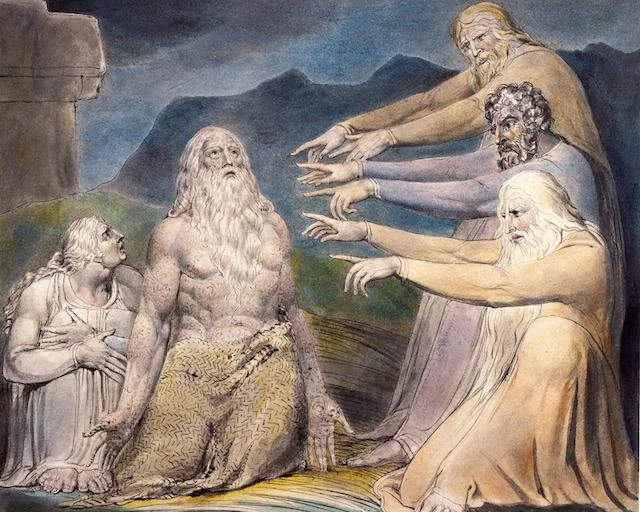
On the one hand, the friends confront Job’s suffering by talking about God rather than to God. Faced with suffering in the world, Job’s friends attempt to rationalize it by drawing on their tradition and what it has to say about suffering. In summary, they respond with a retributive justice stance. Meaning that God punishes and causes suffering only if there is sin; therefore, Job (or his children) must have sinned and thus deserve to suffer.
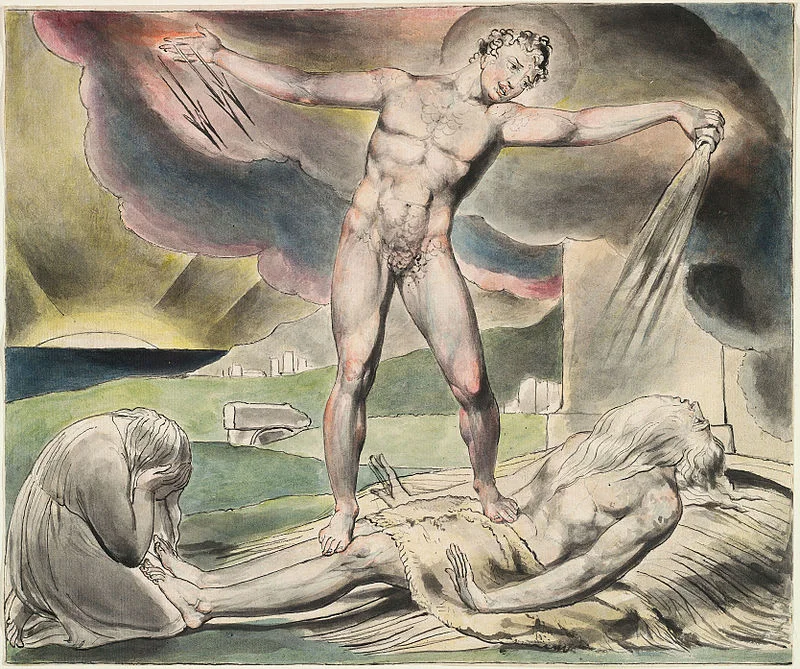
The examination of Job, Satan pours on the plagues of Job, by William Blake
Personally, I fell in love with the Book of Job during my study. As I begin to prepare for CPE, my own questions around suffering arose. But they weren’t the normal questions of theodicy; rather, they were of how to deal with the suffering in the world. More specifically, how can I be present with someone during their suffering. Job showed me what not to say in the dialogues of the friends; however, it also revealed to me that God is present in the suffering individual. God is both creator of and present in all of creation--good and chaotic forces--including humanity. I feel that God’s ending dialogue does not belittle Job, but instead reveals to Job and his friends that they are a part of this creation as humans and that God loves and cares for them in God’s own way which they (we) will never fully comprehend.