Killing the Omni-god: Part Two
With the same root of omniscience and omnipresent, omnipotent is the combination of omni and potens: meaning potent. The potency of God here assumes that there is power. An extremely potent fragrance is, in other words, a very powerful smell. So, power is the characteristic attributed to God when discussing the omnipotence of the deity. Merriam Webster offers the definition as someone or something having virtually unlimited authority or influence. The same dictionary claims its usage began in the 14th century, which is a very important historical fact given that everything concerning the medieval ages revolves around authority and power.
Potens
Kings and Queens, Popes and Caliphates, everybody and everyone were waring for authority and power. A world power in control one day would be destroyed and replaced the next. People, especially the Church, needed an authority that rules over all worldly powers. Naturally, then, God is the answer. God is ruler, lawgiver, and judge of all humanity’s systems of rule. If an omnipotent God is thus ruler over everyone, the church is then divinely ordained as acting delegate to the world. And since the church had God in its corner, the actions—free and willing, though not understood as such—were considered an action stemming from God’s will. Thus we have the power struggles not only within the Church but also between the Church and worldly governments.
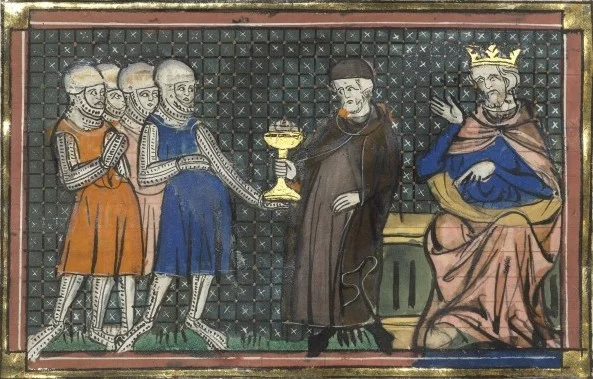
It makes sense then that Christian theologians would create a omnipotent god so that they have an authority to which they can turn to. And as mentioned above, this omnipotent god is referred to by some regarding why God doesn’t step in to stop the suffering of the world. Again this assumes that God is omnipotent and can indeed step in to save humanity. But we do not find such a doctrine in the scriptures.
In the Hebrew Bible/Old Testament, one sees that God is absent regarding interfering with the worldly ways. Not entirely absent though. There are a handful of moments where God does intervene—the flood, passover, and the plagues in Egypt are the only ones that come to my mind. God indeed inspires other humans to set an example of how relying on God’s wisdom and knowledge (omni-science) can lead them out of oppression or self-destruction, but God is not directly intervening in the free will of human choice. Again, God does not even step in to save Jesus, God’s self, from dying on the cross. Therefore we can assume that God is not omnipotent; because if God actually is, then God is a sadistic and morally corrupt deity that deserves to die alone in the vastness of space. But we know that God is good.
The omnipotence of God does not revolve around authority and action—i.e. intervening on behalf of humanity. Rather it centers itself around the moral, ethical, and justice based standard of how we humans can live better in this suffering world. The answer here is Love.
God’s Love is potent, powerful, authoritative. God is good because God is Love, and Love is good because it helps bring an end to suffering. God overwhelms us with Love, and it is through Love that God teaches us—not through punishment or condemnation—but by Loving us all no matter. In the Hebrew Bible/Old Testament, God displays this potency of Love by giving us Laws and Commandments. To live by God’s authority is to live in Love and to live in right relationship with humanity.

Granted, some laws and commandments were indeed written and created by humans for a specific time and context: and it is up to you dear reader to practice discernment in regards to figuring out which ones result in true, divine, and potent Love and which ones sponsor worldly power, authority, and oppression. That is part of the search which every jew and gentile, rabbi and preacher has to undergo—with God as the authority on the subject of Love.
In the New Testament, we see an example of a beautiful human being living a life according to the potency of Love: Jesus of Nazareth. He followed and taught the two greatest commandments given to humanity by God: to Love God with all your soul, heart, and mind (spirit, body, intellect), and to Love your neighbor. On these two laws and commandments hang all the Laws and Prophets. And we can see the potential of the potency of Love in regards to the healing miracles of Jesus. Jesus—relying on the omni-science of God and God’s potent Love—healed many people. Was it God intervening in the world to stop suffering? Yes, but only in the sense that a human decided to do God’s will and follow God’s potent Love thus becoming one with God and being God himself. At theosis, at union, one’s will is equivalent to God’s, and if God’s will is to always Love then one too will be potent with Love. Jesus of Nazareth then becomes Jesus Christ.
The only way God can be omnipotent in this chaotic and suffering filled world is through us abiding by God’s potent Love. God, through us and our free and willing decision to follow the path of Love, becomes incarnate in our actions (because we are doing the Loving will of God) and breathes life into the world. It is there that the world meets God. It is there that God—through the potency of God’s Love—that God becomes present. It is there, in Love, where God exists always.