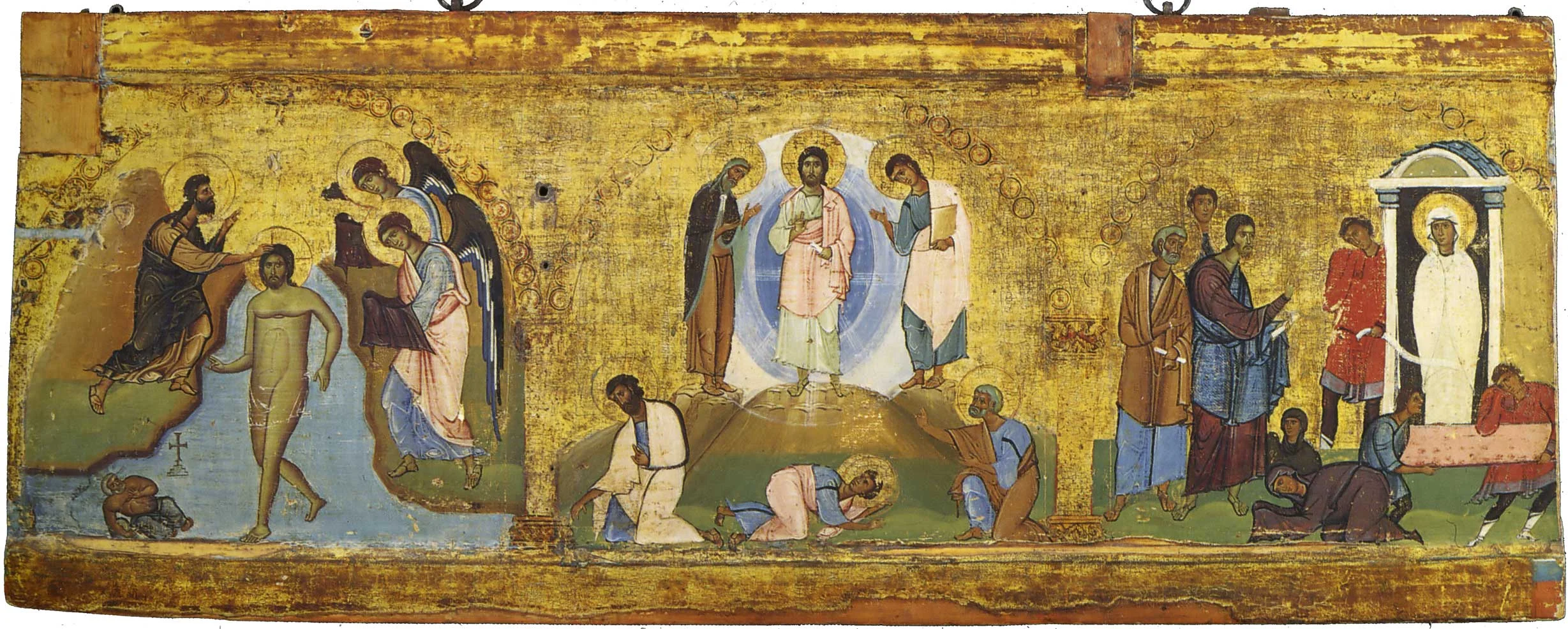
Three Types of Jesus: Part Two
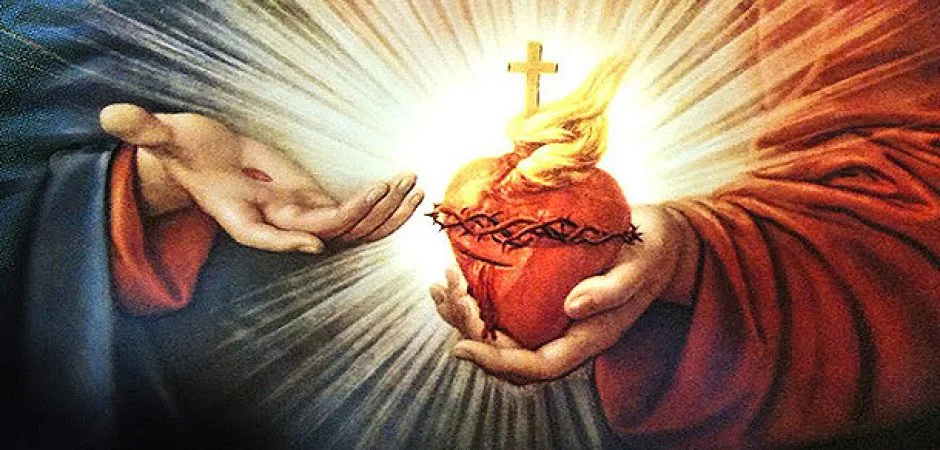
“The eye with which I see God
is the same eye with which God sees me”
When meditating for this post and trying to figure out how I was going to write it, I was reminded of Jesus beckoning his disciples to follow him. Deep within I heard him say: “There are many paths that lead to the Truth, I am but one of them. I will lead you to the Way, the Truth, and the Life. Come and follow me. For my yoke is easy and my burden is light.” It was, in a sense, a reminder of the baptismal covenant I entered into as a teenager; which was again professed when I was confirmed into the Episcopal Church. These words arose out of my desire to know God, to know the Ultimate Reality, to know the True Image from which we all are created—and Jesus informs me that his way is the one I’ve chosen. Post meditation resulted not in an answer, but in a question: what does that exactly entail? To answer this, I had to understand who Jesus is for me.
“And he said to them, Come, follow me, and I will make you fish for people…Come to me, all you that are weary and are carrying heavy burdens, and I will give you rest. Take my yoke upon you, and learn from me; for I am gentle and humble in heart, and you will find rest for your souls. For my yoke is easy, and my burden is light.”
Again, this all happened after writing part one of The Three Types of Jesus. The first Jesus is the one everyone knows about. He is often the Jesus of fundegelical christians or atheists. The second Jesus is the one no-one really knows about; the historical figure of Yeshua. Both have their particular nuances that often inform the other in its depiction of Jesus. And, I suppose, it is within both of these contexts that the Jesus which speaks to me, walks with me, and guides me arises. Therefore, Jesus to me is both the persecuted human and the Cosmic Christ.
Jesus was human.
People often forget this most beautiful and revelatory fact. For me, it is one of the most important teachings in Christian theology. He was like us—human. He was a living and breathing creature that walked on this earth. He was born, had thoughts, worked, ate and drank, and yes, he suffered.
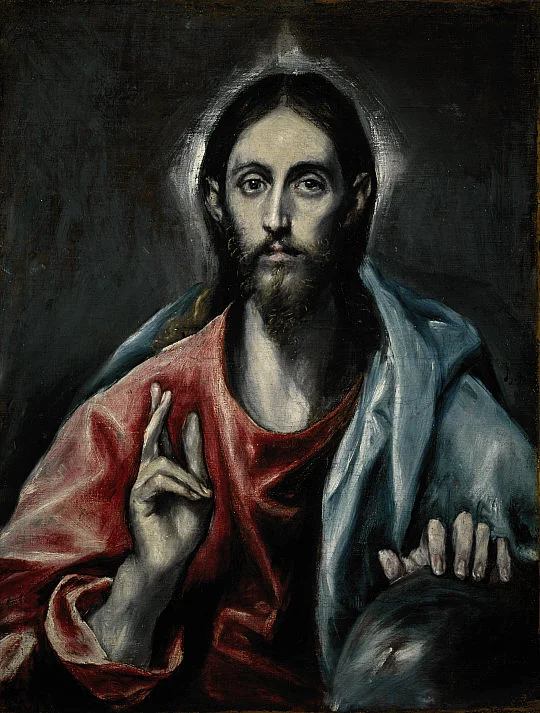
It is not that he suffered more than us, that his suffering is greater, or that his suffering is somehow a salvific sacrifice to appease God. (That’s just bad medieval theology which has caused and continues to cause emotional and spiritual abuse.) Rather, this important point is included in his story to teach us that even Jesus, even God, suffers. It teaches us that there is suffering in this world and that all of creation experiences it in some form. For him it was the execution as a criminal. It was a death sentence, a form of capital punishment. He was and still is persecuted. From fundegelicals using his name to support american nationalism under the Trumpism, or atheists claiming that he and his followers are crazy. He is this insomuch as he is represented by this persecution, but it is not Jesus.
I emphasize the suffering and persecution of the Jesus not to guilt trip you or to make you think that you too will be punished—or should be punished—but rather to point toward his humanity. I am careful to not equate humanity with suffering, however. I do not believe that to be fully human one must suffer. But being human, being a part of creation, does include suffering however one defines it. Instead, I do believe that Jesus, or the historical Yeshua described in the previous post, is the ultimate example of how we are to live in this world.
Jesus, Yeshua, is the Cosmic Christ. He is the mystical teacher of divine humanity. He is the ultimate representation of humanity’s potential to become one with God. Yeshua taught in riddles and parables to breakdown the platonic dualism that infiltrated religious thought. He used paradox to help his followers understand that being human also means that humanity is an image of God.
When pressed on this subject by the crowd, Jesus answered “is it not written in your law that God said you are gods?” He’s referencing both the first creation account in Genesis and Psalm 82:
I said, You are gods;
you are all children of the Most High.
“The kingdom of God is not coming with things that can be observed; nor will they say, ‘Look, here it is!’ or ‘There it is!’ For, in fact, the kingdom of God is within/among you.”
All of us are gods. All of us are God’s children. All of us have the divine spark of creation. All of us are one with God, for the Kingdom of heaven is within and among us.
Jesus, Yeshua, the persecuted Cosmic Christ is the arrow pointing us to this ultimate reality. He is both the Alpha—the beginning of this realization or the awakening to this potential—and the Omega—the end result of union, theosis, and transfiguration of humanity into divinity.
This is the Jesus I know. This is the Yeshua I follow. This is the Cosmic Christ I worship.
I am called by him to follow his example. Yes, I fail. Yes, I suffer. Yes, I doubt. But that only makes me more human. Because remember, my dear reader, to be fully human is to be fully divine.