Hope in Retributive Justice
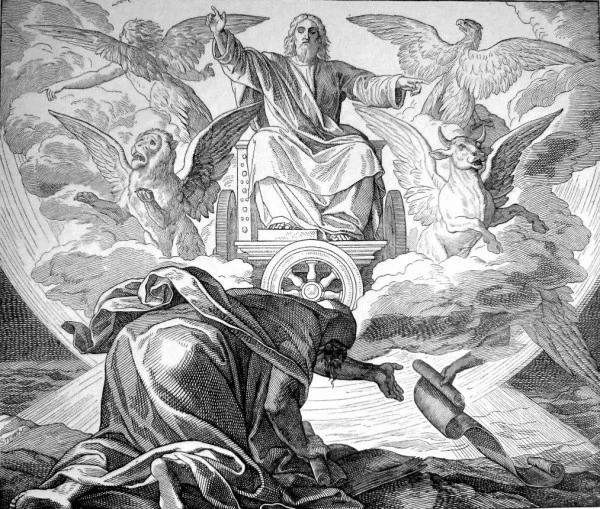
Julius Schnorr von Carolsfeld
Terrible and traumatic are the images that come from the prophetic utterances of Jeremiah and Ezekiel. Both prophets describe the fall of the center of their religion, and both tell this story in prophetic detail. Indeed, the books of Jeremiah and Ezekiel are not for the faint of heart because of this intense retelling of some of Judaism’s most horrific moments in history. The book of Jeremiah is filled with lamentations in prosaic and poetic styles regarding the state in which Israel finds itself; while Ezekiel describes supernatural visions and performs visual acts representing God’s punishment of Israel.
These prophets are crucial for understanding the traumatic experiences of Israel during the years of siege, destruction, and exile by first the Assyrians and later Babylonians. However, in a closer reading of the prophets one will also find hope. My intention is to reflect on the role of hope by understanding it within its greater context of individual retribution.
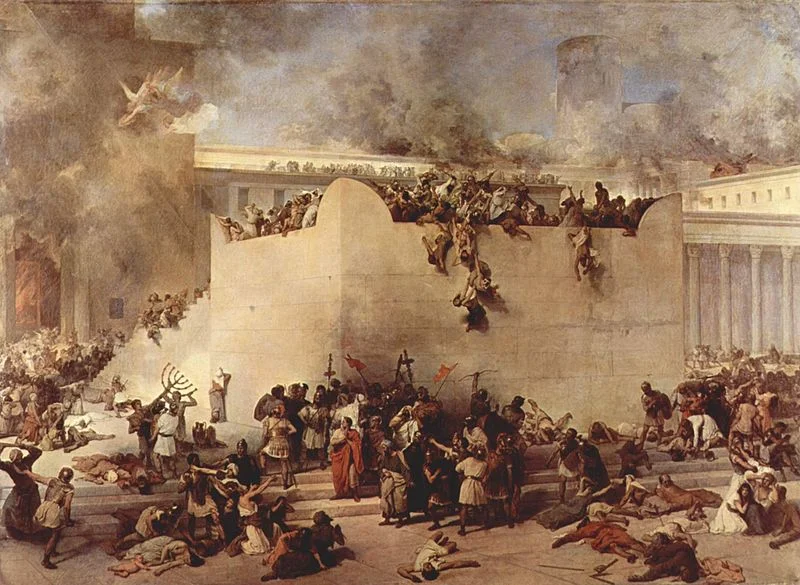
Francesco Hayez
Why Jerusalem was sacked, the Israelite people exiled, and the temple destroyed is a major topic of prophesy for both prophets. They offer litanies of sins and atrocities that the Israelite people are being held accountable for, but the judge of these intergenerational sins is not the king of Babylon. King Nebuchadnezzar did not look westward toward Judah and see an unjust people in need of law and order. Rather it was God who saw his/her people acting against the set laws of their religious tradition. This is retributive justice.
My personal experience with retributive justice comes from Christian theology. Retributive justice is the idea that one sins, is judged, and punished for his/her sin, but within the New Testament--and attributed to further theological development by St. Anselm (d. 1109)--retributive justice comingles with atonement theory. In other words, God saw the sins of humanity and created a son to be sacrificed for the appeasement of God’s judgement; thus, creating a new covenant between God and humanity that is available to all who turn from their sin or repent. This theology of retributive atonement is the hope offered to the Jewish people by Jeremiah and Ezekiel six centuries earlier.
Beginning in chapter 18, Ezekiel begins to describe this hope claiming that the sins of a previous generation--one’s father or mother--will not pass on to his/her child. God speaks through Ezekiel saying, “Know that all lives are mine; the life of the parent as well as the life of the child is mine: it is only the person who sins that shall die.”(Ezk 18.4) Ezekiel continues, “If a [human] is righteous and does what is lawful and right”--that is obeying the laws such as the ten commandments and other deutero/levitical laws--“such a one is righteous; [they] shall surely live, says the Lord God.” (Ezk 18.5-9) However, God reveals that if that righteous person has a child that is “violent, a shedder of blood” and unjust--that is “oppresses the poor and needy,” robs, “takes advance or accrued interest”--then the child will die and his/her “blood shall be upon [him/herself].” (Ezk 18.10-13)
God, through Ezekiel, is saying that if a parent is righteous his/her actions of righteousness do not pass down to his/her child. And if his/her child is unjust then the child will not be spared by the righteousness of his/her father/mother. However, the most important part of this oracle is that this also applies in the reverse. If the mother or father was unrighteous and unjust, and the child sees his/her parent’s unrighteousness and repents to live a just and righteous life, the child will not die.
Jeremiah echoes Ezekiel in chapter 31 vv. 27-30 by offering this hope to the Israelite people. In their prophetic utterances, oracles, condemnations, and lamentations, Jeremiah and Ezekiel are saying that the destruction of Jerusalem and its inhabitants was God’s punishment against the unjust and unrighteous actions of the previous generation of Israelite people as a whole.
But there is hope; hope in the theology of individual retributive justice. Meaning that the punishment for those sins already happened, and that God is ready and willing to enter into a new covenant (Jer 31. 31-40) as long as people are personally/individually willing to repent and return to God. This is the hope offered amidst the terrible and traumatic prophetic utterances of Jeremiah and Ezekiel. This is the consolation of Jeremiah. This is the exalted Israel of Ezekiel. Through this profound and historic change in theodicy and theology for the Jewish people, Jeremiah and Ezekiel reveal to God’s people that the judgement for the previous generations’ wickedness has been exacted, and that there is still hope through individual retribution.
Yes....and....
I must say that I do not ascribe to this particular understanding of how God’s justice is at play in the world. Work is being done by modern scholars/theologians to shift the focus off of retributive justice and onto restorative justice. The difference being that the former relies too heavily on a penal system of judgement; while the latter provides a holistic way of healing and restoration to cosmic equilibrium. With careful examination and exegesis, I believe that Jeremiah and Ezekiel are offering a restorative justice model of God’s judgement; though, that is not what I argue in my reflection above. As modern interpreters, theologians, and scholars, we have a responsibility to understand the text (as best we can) through its original lens. In this case, Jeremiah and Ezekiel offer only individual retributive justice. But--as a preacher, believer, and minister--I believe that the purpose of this retributive justice theodicy was, in fact, to restore the Jewish people to right relationship with God.
Corrine L. Carvalho and Kelly J. Murphy, “Jeremiah” and “Ezekiel” Fortress Commentary on the Bible: The Old Testament and Apocrypha, 725, 775.
“Jeremiah,” Harper Collins Study Bible, NRSV